
 Power, USB and data sockets
 Switches
 Accesories for sockets and switches
 Hermētiskas rozetes un slēdži
 Grīdas rozetes
 Busbars and accessories
 DIN rail metering and signalling devices
 DIN rail protection devices
 Switching and control
 Cam switches
 Contactors and protection devices for industrial control
 Industrial CEE/PCE connections
 Industrial DIN rail power supplies
 Limit switches
 Panel Control Elements
 Korpusi
 Sadales skapji
 Decorative lighting
 Indoor lighting for homes and offices
 LED bulbs
 LED strips, accessories and power supplies
 Lighting accessories
 Lighting controls and sensors
 Outdoor Lighting
 Technical luminaires for warehouses, production and worksites
 Cable trunking
 Conduit and corrugated conduit accessories
 Conduits, corrugated conduits and fixings
 PVC conduit
 Āderuzgaļi
 Electric heating
 Extension Cords, Cable Reels & Inline Plugs
 Instalācijas nozarkārbas
 Kabeļu turētāji, klipši un savilcēji
 Stiprināšanas materiāli
 Hermētiķi, līmes un industriālā ķīmija
 Kabeļu apvalks
 Kabeļu savienojumi
 Kabeļu spailes
 Termocaurules un izolācijas materiāli
 Zemējums un potenciālu izlīdzināšana
 Kabeļu vilkšanas instrumenti
 Mērīšana un testēšana
 Rokas instrumenti
 Speciālie instrumenti
Cart
Your shopping cart is empty! DIN rail connecting busbars and accessories

VEXEN fork-type MCB busbar F45616, 16 mm², 4 phases, 1000 mm, 56 modules
Product Code: F45616
Stock products
44.07€
VEXEN pin-type MCB busbar P45616, 16 mm², 4 phases, 1000 mm, 56 modules
Product Code: P45616
Stock products
44.07€


VEXEN fork-type MCB busbar F30616, 16 mm², 3 phases, 106 mm, 6 modules
Product Code: F30616
Stock products
5.22€

VEXEN pin-type MCB busbar P11216, 16 mm², 1 phase, 210 mm, 12 modules
Product Code: P11216
Stock products
3.13€

VEXEN brass distribution busbar ET163, 63 A, 147×16 mm², 1000 mm
Product Code: ET163
Stock products
12.84€

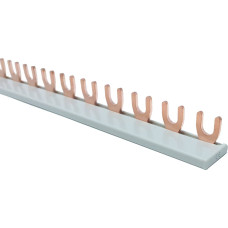
VEXEN fork-type MCB busbar F10910, 10 mm², 1 phase, 160 mm, 9 modules
Product Code: F10910
Stock products
2.20€
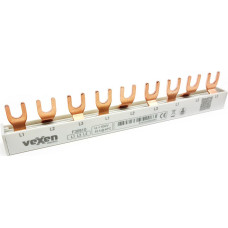
VEXEN fork-type MCB busbar F30910, 10 mm², 3 phases, 160 mm, 9 modules
Product Code: F30910
Stock products
4.80€
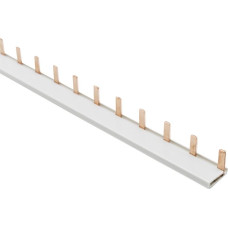
VEXEN pin-type MCB busbar P15710, 10 mm², 1 phase, 1000 mm, 57 modules
Product Code: P15710
Stock products
11.37€
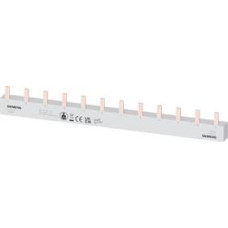

VEXEN fork-type MCB busbar F10916, 16 mm², 1 phase, 160 mm, 9 modules
Product Code: F10916
Stock products
2.44€

VEXEN fork-type MCB busbar F30916, 16 mm², 3 phases, 160 mm, 9 modules
Product Code: F30916
Stock products
5.39€

VEXEN pin-type MCB busbar P15716, 16 mm², 1 phase, 1000 mm, 57 modules
Product Code: P15716
Stock products
12.38€

Siemens pin busbar, 10 mm², 1-phase, 214 mm, with end caps, 5ST3730
Product Code: 5ST3730
Stock products
4.89€
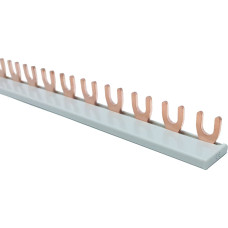
VEXEN fork-type MCB busbar F11210, 10 mm², 1 phase, 210 mm, 12 modules
Product Code: F11210
Stock products
2.95€

VEXEN fork-type MCB busbar F31210, 10 mm², 3 phases, 210 mm, 12 modules
Product Code: F31210
Stock products
5.22€

Siemens pin busbar, 10 mm², 1-phase, 1016 mm, without end caps, 5ST3731
Product Code: 5ST3731
Stock products
14.67€
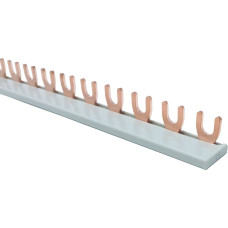
VEXEN fork-type MCB busbar F11216, 16 mm², 1 phase, 210 mm, 12 modules
Product Code: F11216
Stock products
3.13€

VEXEN fork-type MCB busbar F31216, 16 mm², 3 phases, 210 mm, 12 modules
Product Code: F31216
Stock products
7.16€
